Inside the Mechanics of Overlapping Incentive Programs at Gaming Destinations
Iris Griffin · Jun 27, 2026
Inside the Mechanics of Overlapping Incentive Programs at Gaming Destinations
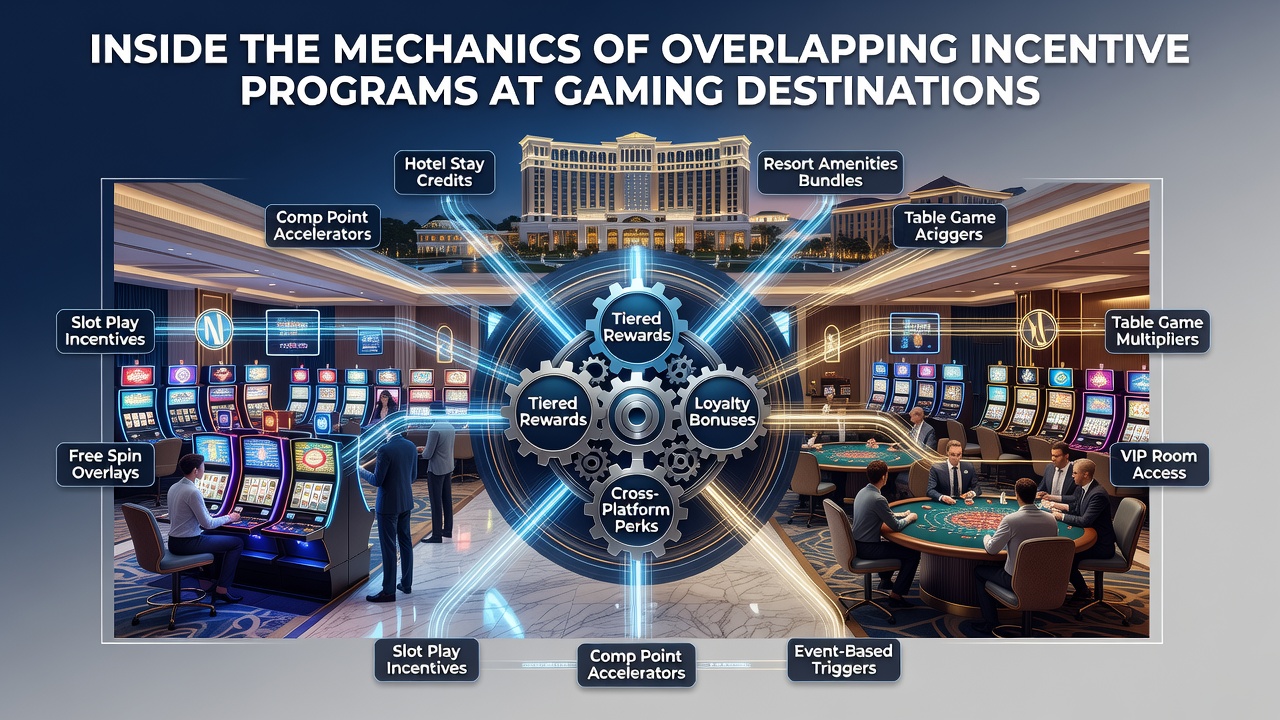
Overlapping incentive programs at gaming destinations combine loyalty points, tiered rewards, tournament entries, and jackpot multipliers through coordinated systems that track player activity across slots, table games, and hospitality services. These programs operate via centralized databases that log every wager, visit duration, and ancillary spend, then apply layered bonuses that activate simultaneously rather than in isolation.
Core Systems Behind Layered Rewards
Player tracking technology forms the foundation where magnetic or RFID cards feed data into software platforms that calculate real-time point accruals, and these platforms then trigger additional multipliers when a player meets thresholds in multiple categories at once. For instance, a guest who earns base loyalty points on slots may receive an automatic entry into a separate raffle if their table game activity crosses a predetermined volume within the same session window, while dining credits convert into bonus spins that stack atop existing leaderboard climbs.
Research from the University of Nevada, Las Vegas Center for Gaming Research shows that integrated systems reduce administrative overhead by merging separate ledgers into one profile, allowing destinations to run concurrent promotions without duplicating staff resources or creating conflicting payout schedules. Data indicates that such unification supports higher retention rates because participants accumulate benefits faster when one activity satisfies conditions across several programs.
Timing Synchronization and Compounded Benefits
Destinations align promotion calendars so that daily point doublings coincide with weekly tournament qualifiers and monthly tier advancement periods, creating natural overlap windows where a single visit satisfies multiple criteria. This synchronization relies on predictive algorithms that forecast peak traffic periods and adjust reward densities accordingly, ensuring that high-traffic days feature denser incentive clusters while quieter periods maintain steady engagement through lower-stakes overlaps.
According to reports from the American Gaming Association, facilities that coordinate these timelines report measurable increases in cross-game participation, since players who start on one machine type often migrate to others when bonus structures activate in tandem. Observers note that the mechanics prevent reward fatigue by spacing out redemption options, so that accumulated credits from overlapping programs become available on staggered schedules rather than all at once.
Regional Adaptations and 2026 Developments
North American properties have expanded these systems to incorporate regional regulatory requirements, while international venues adapt the same core architecture to local tax and reporting rules. In June 2026 several Midwest and Gulf Coast destinations plan phased rollouts of enhanced mobile integration that will let players monitor multiple active incentives from a single app interface, linking on-site activity with off-site reservation bonuses.
European operators following guidelines from the European Gaming and Betting Association have introduced similar overlaps that tie land-based play to online loyalty wallets, creating seamless transitions for cross-border visitors. Figures from industry analyses reveal that these adaptations maintain compliance while preserving the core mechanic of simultaneous reward activation across diverse gaming verticals.
Player Flow and Data Integration Patterns
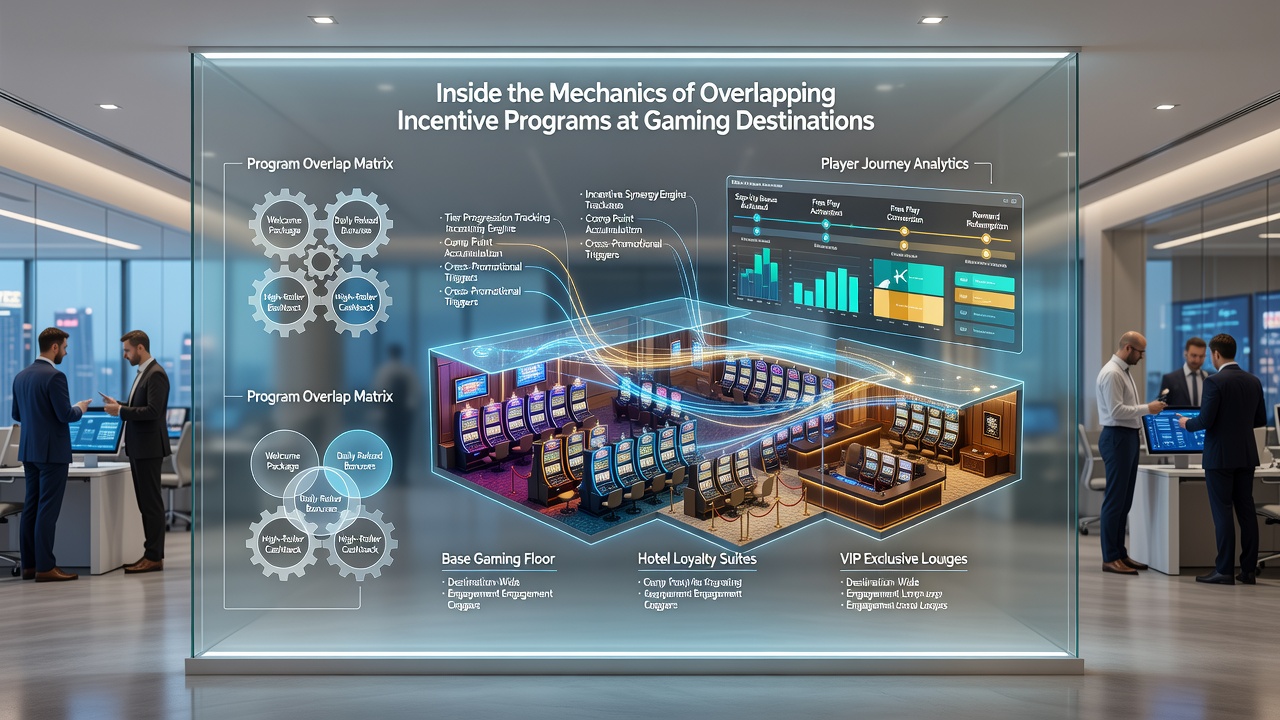
Integrated dashboards allow staff to view how one promotion conclusion influences entry volumes into the next, with algorithms redistributing marketing pushes toward underutilized segments. This creates feedback loops where data from overlapping programs informs future calendar adjustments, such as extending a slots leaderboard period when table game finals generate unexpected cross-participation spikes.
Canadian facilities under provincial oversight have documented similar patterns, where hospitality spend thresholds unlock gaming bonuses that then feed back into tier status calculations. The result is a closed-loop system in which each overlapping element reinforces the others without requiring separate enrollment steps for participants.
Conclusion
The mechanics of overlapping incentive programs rest on unified tracking platforms, synchronized calendars, and adaptive algorithms that convert single visits into multi-category reward opportunities. As destinations continue refining these integrations through 2026, the emphasis remains on data precision and regulatory alignment to sustain steady engagement across slots, tables, and hospitality offerings.