Integrated Reward Systems Aligning Daily Draws with Weekly Table Game Competitions and Monthly Reel Events
Quinn Friedrich · Jun 20, 2026
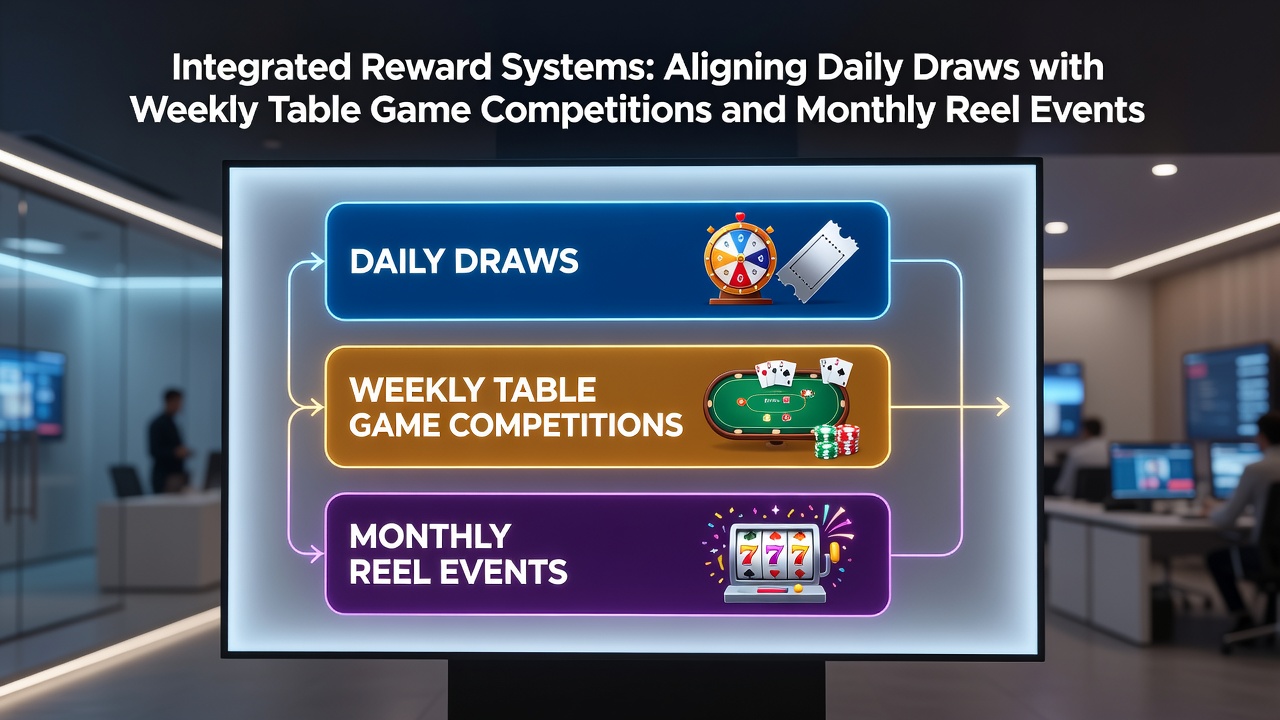
Integrated Reward Systems Aligning Daily Draws with Weekly Table Game Competitions and Monthly Reel Events
Casino operators have developed integrated reward systems that connect daily draws directly to weekly table game competitions while feeding into monthly reel events through shared loyalty tracking and entry mechanisms. These frameworks allow participants to accumulate points or entries across multiple formats rather than treating each event type as an isolated activity. Data from property management platforms shows that synchronized structures increase overall participation rates by linking short-term daily opportunities with longer-cycle competitions.
How Daily Draws Feed Into Broader Cycles
Daily draws typically require players to earn entries through minimum play thresholds on slots or tables, and these same entries often carry forward into weekly table game leaderboards. Operators program the systems so that a single card swipe or digital account update registers activity across all three timeframes simultaneously. This creates a continuous flow where daily results contribute baseline data that influences seeding for weekly events, while cumulative monthly totals determine reel competition brackets.
Property reports indicate that June 2026 implementations at several mid-sized venues introduced automated rollover features, allowing unused daily entries to convert into weekly table game credits without manual intervention. Such automation reduces administrative overhead and maintains consistent player engagement across the calendar.
Weekly Table Game Competitions as Mid-Level Connectors
Weekly table game competitions serve as the structural bridge in these integrated systems, drawing from daily draw participants while generating qualifiers for monthly reel events. Points earned during poker or blackjack sessions convert through predefined ratios into reel standings, and observers note that this conversion happens in real time through centralized loyalty databases. The result is a layered progression where success at one level directly affects positioning at the next.
Research from the American Gaming Association indicates that properties using unified point ledgers see higher retention between weekly cycles compared with venues running separate programs. The data highlights measurable increases in average session length when players recognize that table game activity advances their monthly reel eligibility.
Monthly Reel Events and System-Wide Accumulation
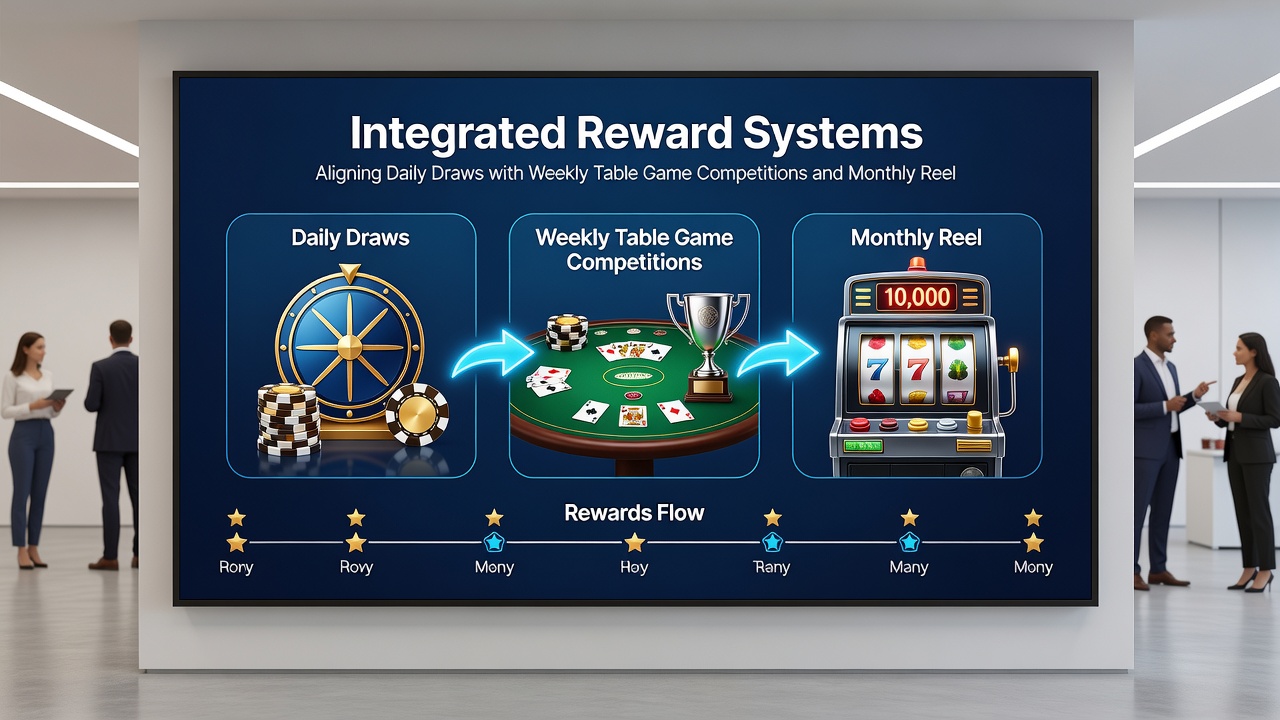
Monthly reel events function as the capstone in aligned reward structures, aggregating data collected from daily draws and weekly table competitions into final rankings and prize distributions. Systems track machine-level metrics alongside player-specific entries, creating dual leaderboards that reward both volume and consistency. Operators adjust multiplier bonuses at the start of each month based on participation trends from the prior weekly cycles.
Figures released by the Canadian Gaming Association reveal that integrated tracking across daily, weekly, and monthly formats produced a 14 percent rise in reel event entries during pilot programs conducted in early 2026. The same reports document reduced overlap conflicts because players receive clear notifications about how their current activity affects upcoming deadlines.
Technical Infrastructure Supporting Alignment
Modern loyalty platforms rely on API connections between draw kiosks, table game management software, and slot accounting systems to maintain accurate cross-event tracking. These connections allow real-time updates that prevent duplicate entries while ensuring every qualified action registers across all relevant competitions. Venues that upgraded their backend infrastructure ahead of June 2026 reported fewer reconciliation errors during the transition to unified reward calendars.
Security protocols require encrypted data transfers between different game categories, and regulatory filings in multiple jurisdictions confirm that these measures meet existing standards for player fund protection and prize integrity. The technical setup also supports segmented marketing that targets players based on their historical performance across the three event types.
Player Journey Mapping and Entry Pathways
Participants move through defined pathways where daily draw participation establishes baseline eligibility, weekly table game results provide advancement opportunities, and monthly reel standings deliver the largest prize pools. Operators publish flowcharts that illustrate exactly how many entries transfer at each stage, giving players transparent visibility into the mechanics. Case examples from properties using these maps show that clear communication correlates with higher completion rates through the full monthly cycle.
Additional tools such as progress dashboards display remaining requirements for weekly qualification while projecting monthly reel positioning based on current daily activity. These interfaces reduce uncertainty and encourage continued play rather than forcing players to track separate programs manually.
Conclusion
Integrated reward systems that align daily draws with weekly table game competitions and monthly reel events rely on shared tracking infrastructure, automated conversion rules, and transparent player communication. Industry data from multiple regions confirms measurable participation gains when these elements operate together. Properties that maintain consistent technical standards and publish clear progression pathways continue to refine these frameworks as new calendar cycles begin.